How do you turn stakeholder dialogue into a transformation lever rather than a compliance exercise?
10 juin 2026
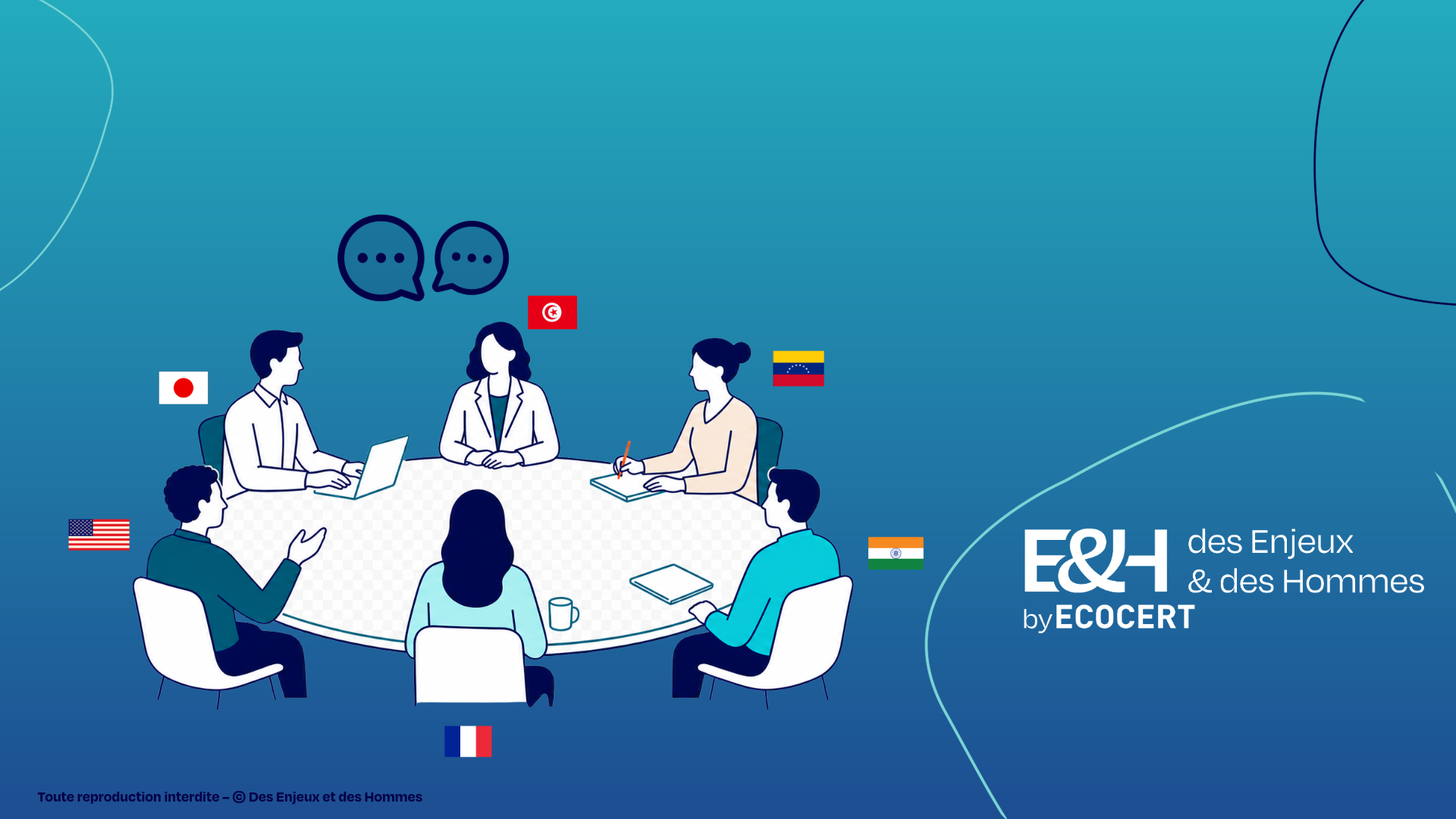
Every CSR/ESG strategy rests on authentic dialogue with stakeholders, which makes the policy more legitimate and embeds it for the long term. But when those stakeholders are spread across several countries, speak different languages and have very different expectations and levels of sustainability maturity, how do you organize this dialogue in a practical and constructive way?
This is one of the questions E&H addresses regularly on its international projects. With over 100,000 stakeholders engaged in total since the firm was founded, it’s an expertise built up through dozens of projects in very different contexts.
Who are the stakeholders in a multi-country context ?
In an international organization, stakeholders are numerous and diverse. There are of course the employees and managers of subsidiaries, but also local clients and partners, suppliers, representatives of local communities, institutional and regulatory players in each country or region, and sometimes NGOs or associations specific to certain geographies.
The first step in a multi-country dialogue process is to map these actors precisely, to identify which ones are to be prioritized according to the issues and geographies involved, and to define the most appropriate consultation methods for each stakeholder group. Not everyone needs to be consulted in the same way or with the same depth. The maturity of the relationship and its quality become performance indicators.
Organizing structured, credible dialogues
Stakeholder dialogue cannot be left to improvisation, especially in an international context. E&H has developed a rigorous methodology for these exercises: defining the objectives of the consultation, choosing the right tools (quantitative surveys, focus groups, workshops, individual interviews), designing interview guides tailored to different audiences, organizing dialogue sessions (in person or remotely depending on contexts), analyzing results and feeding back.
This approach was implemented notably for Groupe Lefebvre, where the consultation mobilized over 1,300 people across 7 subsidiaries. The diversity of profiles consulted, from frontline employees to executive committee members, including clients, partners and the Group’s stakeholder committee, made it possible to produce a materiality analysis that genuinely reflects the complexity of the group, its challenges and markets. Read the Groupe Lefebvre case.
Managing diversity of expectations and maturity levels
One of the specific challenges of multi-country dialogue is the wide variation in levels of ESG awareness across geographies. Some European stakeholders are already well versed in regulatory expectations, environmental impacts of the business, and human rights due diligence issues in supply chains. Others, in countries where sustainability regulation is less developed, approach these topics with fewer established reference points.
This heterogeneity is valuable: it forces questions to be posed in a more fundamental way, avoids taking certain things for granted, and surfaces concerns that might not have emerged in a more homogeneous dialogue. The best international CSR strategies are often those that have been able to integrate these less conventional perspectives and draw lessons from them for the whole organization.
From dialogue to action: keeping commitments alive over time
Stakeholder dialogue is only worthwhile if it leads to concrete commitments and transparent communication on the mid and long term. Consulted stakeholders need to be able to see how their contribution has influenced the company’s strategic choices. This is what builds lasting trust and keeps these actors engaged over time.
For UPERIO, the co-construction process for the company’s Purpose statement to a CSR engagement plan presented to the Group’s Board and translated into an operational roadmap for the newly established CSR leadership. The remarkable convergence of views expressed by employees from 8 different countries was one of the most striking findings of the mission, and one of the most persuasive arguments for the shareholders.
For BENEO, the rollout of its international CSR strategy (that E&H helped co-construct) drew on an international training program designed with E&H, illustrating the key role of internal stakeholder dialogue in operationalizing transformation. This program, deployed across Europe, the Americas and Asia, was built by integrating the expectations and specificities of headquarters teams, subsidiaries and business functions (procurement, marketing and communications, sales), to support concrete, contextualized ownership of sustainability issues in relation to the company’s activities and challenges. By strengthening understanding of the key impacts of the food ingredients sector (climate, biodiversity, water, human rights) and of BENEO’s commitments, these tailored programs enabled CSR to be embedded in operational practices, demonstrating that structured, multi-level dialogue is an essential lever for a successful international rollout.
What multi-country dialogue delivers in practice
Multi-country dialogue delivers what purely quantitative approaches cannot capture: a nuanced understanding of the business, human and cultural dynamics that determine whether an ESG approach succeeds in each local context. By bringing together stakeholder perspectives, it makes it possible to identify both the barriers and the enablers of change, to reveal blind spots by integrating stakeholder expectations, and to give the CSR approach greater legitimacy through a genuinely multi-actor view. This work also fosters the emergence of local champions and the early engagement of key stakeholders, which is an essential condition for embedding CSR durably, while surfacing opportunities specific to certain markets or segments.
This human dimension is what E&H has placed at the heart of all its advisory and training projects since the firm was founded in 2003. Because when all is said and done, whether in Paris, Abidjan, Chennai or Chicago, it is always people who make things move. And they are the ones who need to be convinced and reassured, then equipped and supported over the long term.
Would you like to set up a stakeholder dialogue process internationally? Contact us
Discover more articles on strategic CSR deployment here, as well as our references and missions on our case study page.